Last updated on
Learn how to securely attach a kitchen island to the floor for a stable and safe cooking space.
Looking to anchor your kitchen island securely to the floor and prevent it from taking a spontaneous trip across the room while you’re not looking? You’ve stumbled upon just the right guide! From sizing up your space to putting the finishing touch on stability with the right bolts, this article dishes out the ultimate recipe for keeping your island grounded. It’s your go-to blueprint for mastering everything from floor joist hunting to ensuring your island sits as level as your morning espresso shot. Stick around, and you’ll have that island standing strong like it owns the place!
Key takeaways:
- Gather essential tools and materials beforehand.
- Measure and mark island placement accurately.
- Locate floor joists for secure anchoring.
- Pre-drill holes for stability and avoid splintering.
- Use appropriate fasteners and check for level.
What's Inside
Gather Necessary Tools and Materials
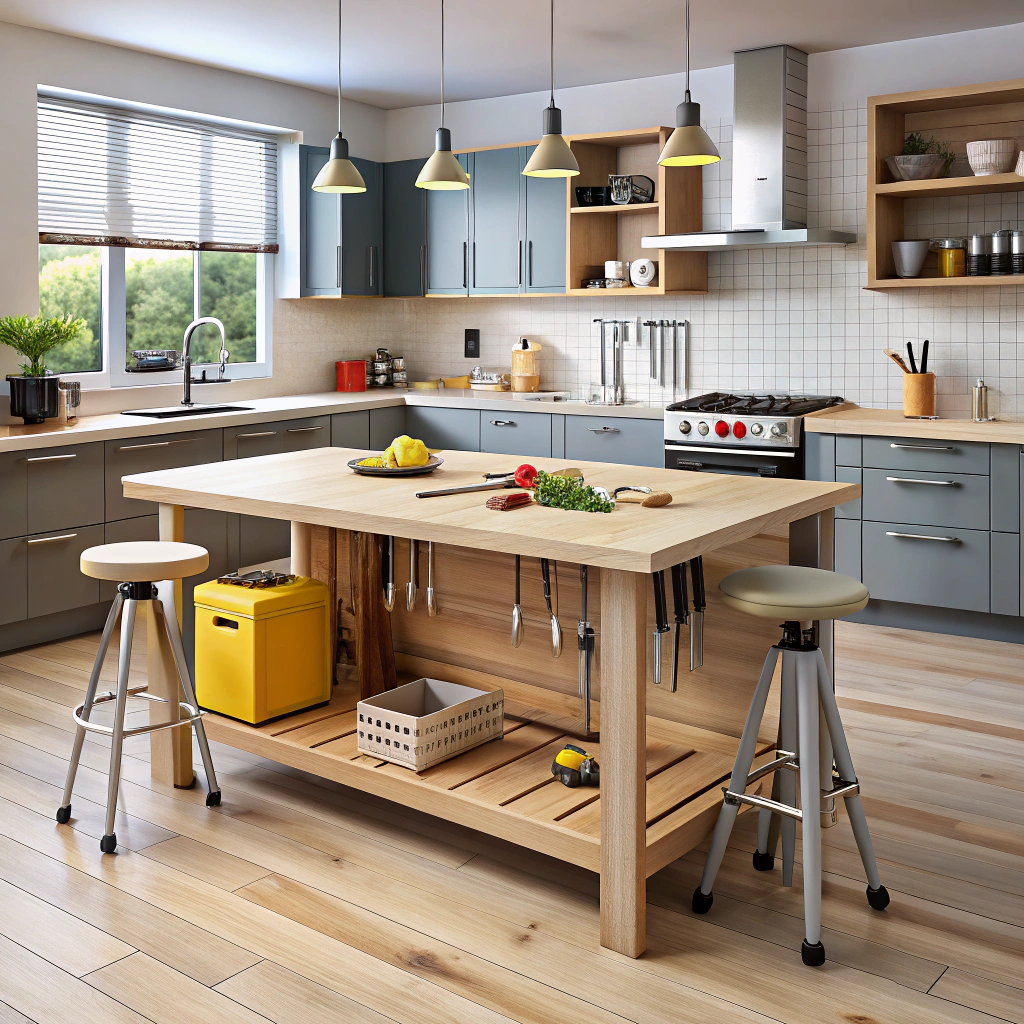
Let’s dive right in. When preparing to secure your kitchen island, the right tools are like your favorite sous-chef—indispensable. You don’t want to reach the crucial moment only to discover you’re missing something essential.
First up, the good ol’ measuring tape. It’s your best friend here to ensure precision. Nothing worse than a wonky island!
You’ll need a drill and appropriate bits—think of them as your trusty sidekicks ready for action. Don’t forget, pre-drilling saves you from the heartbreak of splintering wood.
Gather some wood screws or bolts. Size matters, so make sure they’re appropriate for your floor and island type.
A stud finder is essential. It’s like playing hide-and-seek with your floor joists, minus the childhood nostalgia.
Level it out with a spirit level. You want an island, not a playground slide. Bubbles in the center, folks!
Lastly, have some brackets or cleats ready. They’re the ultimate security bouncers for your kitchen island. No funny business with wobbly wood allowed here!
Measure and Mark Placement
Accurately identifying where your kitchen island will sit is crucial. Think of it as finding the perfect spot for a cat in a sunbeam. Nobody wants a crooked island, unless you’re opening a quirky diner.
Use a tape measure to ensure there’s ample space around the island for easy movement. Too cramped, and you might end up as the unwilling contestant of “Kitchen Conga.”
Visualize the workflow. Consider proximity to the stove, refrigerator, and sink. This triangle determines if you’ll glide effortlessly or shuffle like a penguin on a treadmill.
Mark the designated spot on the floor with painter’s tape—it’s like your island’s personal red carpet entrance. Double-check these marks; they’re the foundation of your culinary stage.
Check for Any Existing Flooring Conditions
Before grabbing your drill like a superhero with a new cape, take a close look at the terrain. Flooring can be a sneaky little gremlin. What lies beneath can affect your mission.
If you’re working on tile, tread carefully. Drilling through tile is like performing surgery on a very expensive patient. Use a masonry bit and apply steady pressure to avoid cracks. Nobody likes sudden disasters.
On wood floors, check if it’s solid or floating. Why? Drilling into a floating floor is like trying to pin a badge on quicksand. You need to anchor to something more solid—hello, floor joists.
And those delightful creatures called in-floor heating systems? Yikes, avoid piercing those tubes unless you need an indoor water feature. Study the floor layout plan to dodge unintentional sprinkler showmanship.
By understanding the flooring quirks, you can save yourself from a world of unwanted surprises. Who knew kitchen adventures could be so thrilling?
Locate Floor Joists
Time to play detective on your kitchen floor! Joists are the unsung heroes holding everything up, so finding these trusty beams is vital.
First, grab a stud finder. This handy little gadget is like a magic wand for floors. Slowly slide it across the floor to pinpoint those elusive joists hiding beneath.
Another trick is to knock-knock on the floor, listening for a solid, hearty thud instead of a hollow sound. Imagine you’re cracking a code; who knew locating joists could be this thrilling?
If all else fails, a peek at your home’s blueprints can save the day, revealing the joist schedule like a treasure map.
Always remember, safety first. If a joist isn’t quite where it should be, that’s a good sign to call in a pro. Let’s keep those toes intact!
Pre-drill Holes for Stability
Got your tools? Great! Now let’s drill down—literally. Ensuring you have pre-drilled holes is as vital as remembering to turn off the stove. Missing this would be like forgetting your keys when you’re already late. No one wants that.
Pre-drilling is your insurance policy against splitting. When wood meets screw without a guiding hand, chaos ensues. First, select a drill bit slightly smaller than your screws. You want it snug but not suffocating.
Keep your holes straight. Imagine you’re threading a needle: go off course, and you’re wrestling thread for hours. Try using a guide if your hands tend to have a party of their own.
space holes evenly across the area. Like distributing pizza slices at a kids’ party, everyone (the screws) needs their fair share. Generally, 3-6 inches apart works well with heavier materials needing more support.
Lastly, take it slow. Speeding through this like a marathon leaves room for slip-ups. Engage in a slow dance with the drill, and you might find the rhythm even helps your DIY groove.
Use Appropriate Fasteners
Choosing the right fasteners is crucial to ensure your kitchen island isn’t just stylish, but also as stable as a sumo wrestler in a pink tutu.
First, consider the material of your floor. Wooden floors are quite welcoming to wood screws, while concrete floors may need concrete anchors. Each has its purpose and not using the right one is like trying to butter toast with a shoehorn. Awkward and ineffective.
Remember that the size of the screw or anchor matters. Too small, and your island could tip over like a sleep-deprived toddler. Too large, and you’ll be shaking your head wondering where your precious flooring went. It’s all about balance.
And last but not least, use washers to distribute the load evenly. Think of them as the unsung heroes, keeping everything in place without seeking the spotlight. They might be small but leave them out and you’ll notice it—probably when your island wobbles more than your neighbor’s Labradoodle on linoleum.
Attach Brackets or Cleats
Brackets and cleats are your kitchen island’s best friends. They’re like the hefty bodyguards keeping it in place. Here’s the scoop on using them:
Firstly, choose brackets that match the heft of your kitchen island. No lightweight brackets for a solid hunk of marble. That’s like asking a chihuahua to guard your treasure.
Next, attach them to the island base first. This way, it’s like putting socks on before shoes—makes life so much easier.
When you’re lining them up with the floor, make sure they hit those previously located floor joists. It’s like a GPS for your screws. They need a solid destination.
Always check for plumb and level, unless you fancy a tipsy island. Which is a big, nope.
Screw them in tight but not too tight. You want them secure, not squeezing the life out of your floorboards.
Lastly, take a moment to admire your work. It’s secured like a pro, and your kitchen island isn’t going anywhere fast. Cheers to that!
Bolt the Island Frame Securely
Using the right bolts is like choosing the right partner—they need to fit perfectly to hold everything together. Start by slipping bolts through the pre-drilled holes in the island base. Make sure the bolts are long enough to reach through to the floor joists, providing strong support like a best friend during a break-up.
Tighten the bolts snugly, but resist the temptation to go full Hulk mode; overtightening could lead to more wobble than a toddler on roller skates. Check that each bolt is straight and secure, offering unwavering support like a well-stocked pantry on a baking day.
Using washers can help distribute tension evenly, and prevent the bolts from slipping. Plus, they’re like little superheroes preventing disaster, one squeaky step at a time. Finally, confirm all bolts are consistent. A tightly bolted island will stand as steadfastly as your commitment to never letting anyone else cook in your kitchen unsupervised.
Ensure Level Placement
Grab that spirit level like it’s the only thing standing between you and a lopsided soufflé. Ensuring your kitchen island is as flat as a pancake is crucial for both aesthetics and function.
Before you secure everything, here’s what you need to check:
Position your spirit level on the island’s surface. Check from side to side and front to back. If your island is on a slant, your eggs might slowly roll away during prep, and nobody needs that kind of drama.
If it’s tilted, adjust the height of your unit’s feet or legs until the bubbles rest in the center. It’s like a game of hide-and-seek with gravity.
For a more stubborn tilt, wedge shims under the low side. Think of shims as tiny, ambitious wedges that dream of keeping your island steady. Use them wisely.
Then, give your elbows a rub, simulating some action. Imagine a busy morning with cereal bowls lining up one after the other. If you spot a shift, go back to troubleshooting.
A level island is a happy island, sitting smugly in its newfound balance while you’re cooking up a storm.
Double-check Stability
Let’s ensure your kitchen island isn’t going for an unexpected slide across the floor like a toddler on roller skates.
First, give it a good nudge. If it holds firm, you’re in business.
Feel adventurous? Try leaning on it, channeling your inner chef as if you’re about to knead dough like a pro.
Grab a level. Check all sides; your coffee shouldn’t slosh to one side on a 10-degree tilt.
Inspect the fasteners, making sure they’re snug as a bug.
And if there’s any wobble? It’s back to securing those fasteners, tightening until everything’s as solid as mom’s opinion on her secret cookie recipe.
After all, nobody wants a kitchen island that waltzes.