Last updated on
Choosing a playground flooring material is a multistep process. The product needs to be durable, safe and accessible for all kids.
Park planners and contractors can learn more about durable playground surfacing to determine how brands like No Fault make leading options for projects of any scope.
What's Inside
Key Factors to Consider When Choosing Playground Surfacing
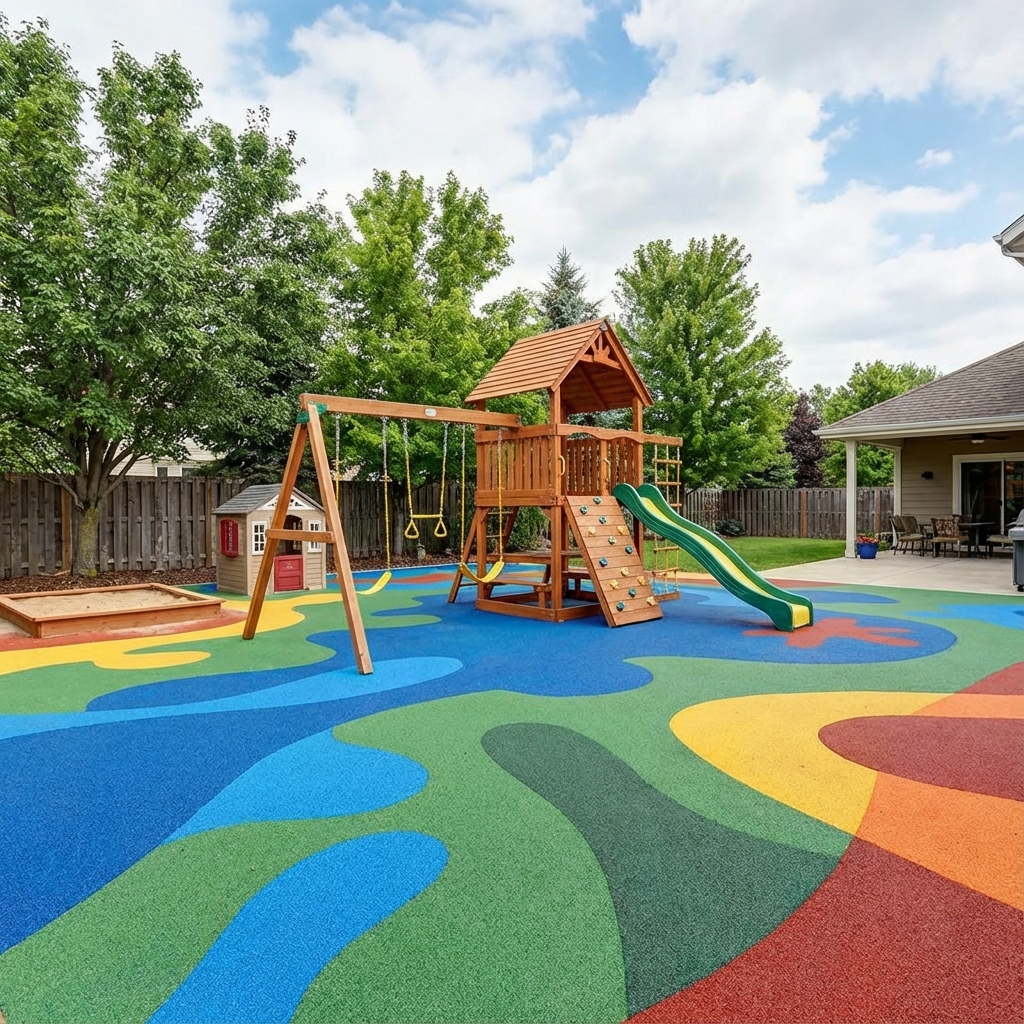
Before teams compare surfacing materials, they should know how to determine which manufacturer produces top-quality options. Flooring selections create fun aesthetics and make playgrounds last for years if they come from leading manufacturers.
1. Check Safety Measures or Ratings
Keeping kids safe is the primary goal of playground surfacing. When children fall or jump off equipment, they need a surface that reduces the risk of serious injury. Playground flooring can accommodate numerous shock absorption strategies to cushion kids while they have fun. Any good manufacturer will list the playground safety standards their products meet, like the critical fall height criteria used for testing as outlined by the ASTM.
2. Explore Weather Resistance and Durability
Unless teams are working on an indoor playground, their surfacing will face continuous weather exposure. Park operators and contractors should check the weather resistance noted on each product’s listing. They may need to withstand extreme heat or snow over the years. Noting a material’s resistance is essential when learning how each type of surfacing material performs in high-traffic areas. They will not hold up under continual foot traffic if the weather quickly erodes their durability.
3. Picture Long-Term Maintenance
Even the best playground surface materials will require some recurring maintenance. Teams should investigate the necessary upkeep for any potential product before investing. Pea gravel will require raking to remove leaves and other debris. Unitary surfaces could need specialized maintenance to repair cracks or seams. The work will cost time and money, so it is an essential consideration while comparing playground surface products.
4. Evaluate the Material’s Cost
A project’s budget is one of the key factors to consider when choosing playground surfacing. Some products will have lower up-front costs, but require long-term maintenance investments. Loose fill materials could degrade or spread outside the park during heavy rains. Teams may save more money initially by using them, but have to pay the same amount to replace them soon after. The best decision depends on the budget and financial flexibility.
5. Consider the Material’s Accessibility
Every child should have access to their local playground. Surfacing selections determine whether that is possible. The Americans with Disabilities Act (ADA) requires that playground surfaces have firm flooring connecting to each play component for kids using mobility accommodations like wheelchairs. Filling a playground with sand is less inclusive than a playground with rubber tiles.
6. Investigate Environmental Effects
Many playground projects now prioritize sustainability during the planning process. The general public may prefer an eco-friendly playsite for their children. Local government regulations could also require sustainable materials like rubber mulch rather than wood mulch. The best manufacturers will know the environmental footprint of each product, so teams understand what they are potentially using for their community’s new park.
Types of Playground Surfacing Options
Once contractors and park planners understand how to select a surfacing option for their project, they should also be aware of what leading manufacturers offer. Learning the differences will make material selection more straightforward.
Loose-Fill Materials
Playgrounds with loose-fill materials have flooring that creates extra cushioning with individual particles. Understanding how each type of surfacing material performs in high-traffic areas will clarify why some people among these choose loose-fill options:
- Sand: One of the most budget-friendly and easy-to-install materials, sand provides high-impact absorption. However, it spreads throughout the area, particularly in high-traffic areas, because it is easy to kick.
- Rubber mulch: An environmentally friendly option. Each piece comes from some of the nation’s 280 million scrapped tires, enhancing shock absorption. The slightly heavier material may remain in place better in busy areas, though it is still likely that the mulch will travel with continuous foot traffic.
- Pea gravel: A non-toxic, natural and budget-friendly material. Installation may take longer because it is heavier, but the loose surfacing provides a more solid footing than sand. However, teams may need to get more than one type of flooring material, as the loose particles might not meet ADA compliance.
- Engineered wood fiber: The shredded wood chips are soft and provide a natural aesthetic, and are budget-friendly. Wheelchairs can move over engineered wood fiber because it is not too soft, though the texture might cause splinters after impact.
Unitary Surfacing Products
Teams sometimes opt for unitary playground flooring when they want a solid play area with a continuous material. The product also performs well in heavy foot traffic areas, depending on the quality of manufacturing invested in every product.
- Synthetic or artificial turf: This material mimics grass to provide the same aesthetic without dirt that could contain toxic metals or bacteria, providing an extra cushion under the base. The product is durable and low maintenance, although it may require a more extensive installation plan due to the multi-layered design.
- Poured-in-place rubber (PIP): An eco-friendly option, the product uses recycled rubber to form flexible custom flooring. The ADA-compliant option is also excellent for impact absorption. If teams know the exact measurements of their playground design, PIP could be a great option for their project.
- Rubber tiles: Easy to install because they interlock, park planners and contractors can make rubber tiles fit wherever they need and rely on the eco-friendly material for years. However, attention to detail is key when installing the product, as it could present a trip hazard.
- Bonded-in-place rubber (BIP): Unlike PIP, it uses a glue-like product to hold rubber particles together rather than melting them into one unit. BIP is among the more durable playground surfacing products to consider for high-traffic playsites because it is so durable.
Why No Fault Is a Leading Provider of Playground Surfacing
When contractors and park planners are ready to explore surfacing options, they should start with No Fault. The company makes a variety of safe, durable surface products like poured-in-place rubber and synthetic turf. Each product is easy to work into creative playground designs because they are each customizable. Colors, shapes and materials can match any client’s needs after they get a custom quote.
No Fault also serves numerous markets, which makes playground projects easier to manage. Whether teams want to give young kids places to develop their skills or create a themed space for older kids to hang out, No Fault has surfacing options that support any design. The company has been helping with playground creation for over 50 years with ADA-compliant and sustainable products that are durable even under high-traffic conditions.
How to Compare the Costs and Benefits of Different Playground Surfacing Materials
Figuring out how to compare the benefits and costs of varying surfacing products does not have to complicate a team’s timeline. Planners can proceed with straightforward strategies, such as:
- Comparing design and installation fees with different companies to understand which are better for the budget
- Inquiring about whether surfacing manufacturers provide in-house installation support
- Determining the cost of long-term maintenance by estimating how often materials will need partial or total replacement
Every project is different, so teams should understand how to compare the costs and benefits of varying playground flooring materials according to what is best for their plans. They will know they found the best material when they have a durable product that lasts in high-traffic conditions from a manufacturer known for making top-tier products.
Compare Durable Playground Surfacing Options
Numerous surfacing products are ready for playground projects. Contractors and park planners can confidently choose the best material for their local community by understanding the various available options and comparing them with simple strategies. When teams begin their search with reliable manufacturers like No Fault, they will have an easy time finding the best solution for their projects.
Read More
 Are Smart Homes Actually Better for the Environment? The Benefits, Tradeoffs, and Hidden Costs of Connected Living
 Understanding Your Septic System: Complete Guide for Rural and Suburban Homes
 Why Annual AC Maintenance Matters: The Real Cost of Skipping Tuneups
 Foundation and Crawlspace Design: Preventing Moisture Damage and Pest Entry
 Your First Steps in an Older Home (What to Inspect and Maintain)